
BLT Laser Head
Technology Features
Every BLT head ships with a suite of intelligent sensors, monitoring systems, and cutting algorithms. Here's what each one does — and why it matters on the shop floor.
Optical & Precision
The features that control beam delivery, focus accuracy, and position stability. These directly determine cut edge quality and how consistently the head performs over long production runs.
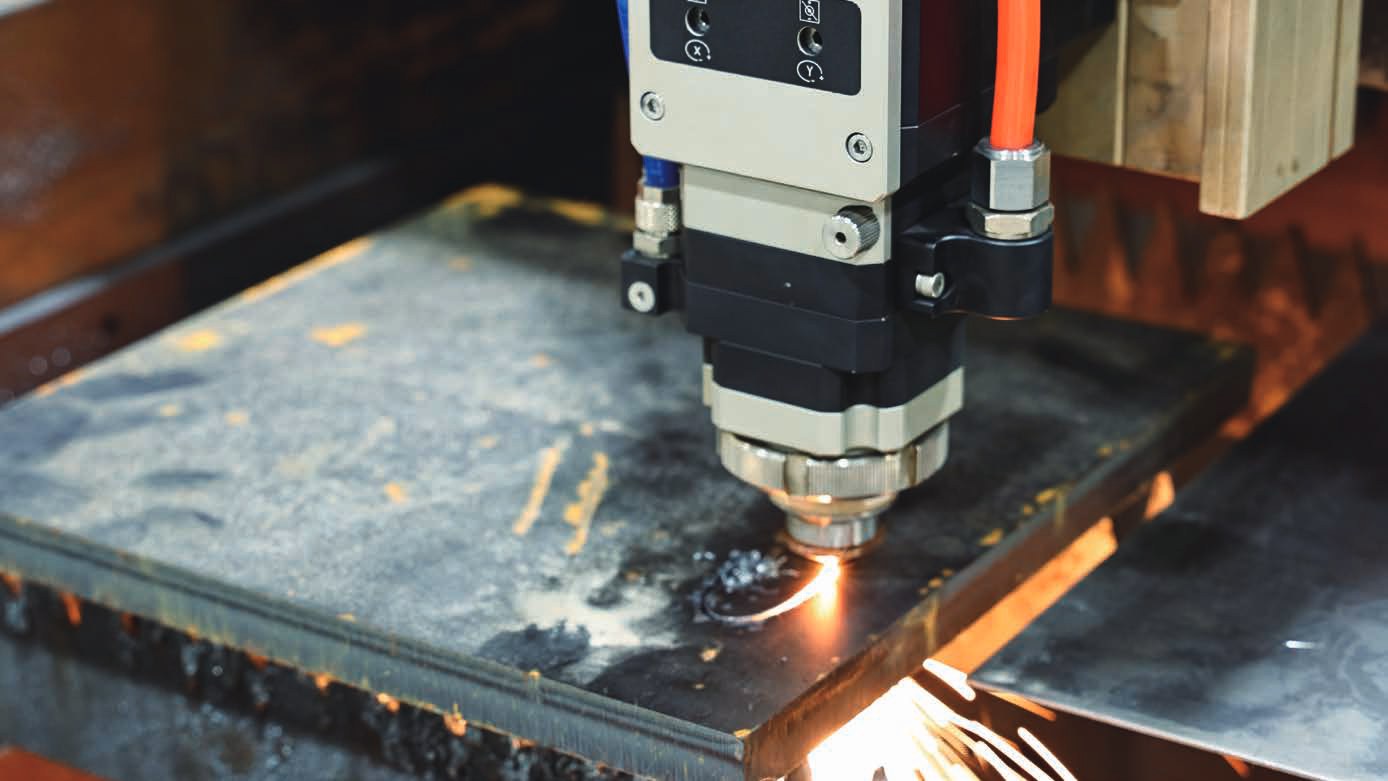
Why optical precision matters on the shop floor
A 0.1mm focus drift is invisible to the eye but produces inconsistent kerf width, increased dross, and failed edge tolerances on tight-profile parts. Every feature in this group exists to keep the beam exactly where the CNC program says it should be — automatically, without operator intervention.
See which head has which features →Fast Focusing
Focal position is adjusted by moving the collimating lens rather than the focusing lens. This delivers faster focus travel speed (up to 500 mm/s) and eliminates mechanical hysteresis in the focusing path — reducing setup time between material thicknesses.
Built-In Capacitance Amplifier
The capacitance sensor that measures nozzle-to-workpiece distance is amplified on-board the head itself — not in a remote controller box. This reduces electrical noise in the signal, giving the Z-axis servo a cleaner input and resulting in more precise height following on warped or uneven plate.
Focusing Lens Monitoring
A thermal sensor continuously monitors the temperature of the focusing lens during operation. If the lens becomes contaminated and begins absorbing laser energy, the temperature rises above threshold — the system automatically stops the laser and raises an alarm before the lens fractures or the cut quality degrades enough to scrap a part.
Real-Time Focus Centering
A camera collects molten pool images during cutting. The sensor detects any coaxial deviation between the laser beam axis and the nozzle center, then automatically adjusts in real time. This ensures the beam stays centered in the kerf even as the head warms up or components drift — critical for consistent edge quality over long production runs.
Quick Focus Centering
Traditional nozzle centering uses tape and burn marks — slow, subjective, and operator-dependent. Quick Focus Centering replaces this with one-click visual centering through the head's built-in camera. Nozzle replacement takes seconds instead of minutes, reducing production interruptions during shift changeovers.
Variable Beam Shape
Available on BLT-9MA series (30–60kW). Switches between M1 small spot mode (concentrated energy — high speed on thin sheet) and M2 large spot mode (distributed energy — deep penetration on ultra-thick plate) within the same head. Eliminates the need to swap heads when moving between thin-sheet and heavy-plate work on the same machine shift.
Protection & Monitoring
Nine systems that watch over the head's optical components, gas delivery, and production environment — and take automatic corrective action before problems become downtime or scrapped parts.
Closed-Loop Monitoring
Multiple sensors feed real-time status data back to the cutting controller in a closed loop. The system continuously cross-references actual cutting conditions against expected parameters — automatically diagnosing deviations and raising early warnings before they become failures. This is the foundation that all other monitoring features build on.
Full-Body Water Cooling
A water-cooling circuit covers 90% of the cutting head's optical path — including the collimating lens, focusing lens, and body. Optical components held at a stable temperature maintain their alignment and coating integrity over long production runs, especially at higher power levels where heat generation is significant.
Nozzle Cooling
A dedicated cooling circuit inside the nozzle section keeps the nozzle tip temperature stable during continuous cutting. Nozzle degradation from heat is one of the most common causes of inconsistent cut edge quality — especially on long uninterrupted cuts. This extends nozzle service life and widens the operating window for batch production.
3 / 4 Sets of Protective Windows
The protective window sits below the focusing lens and takes the direct hit from spatter and back-reflections. Higher-series heads include 3 or 4 separate protective windows in the optical stack — each additional window extends the service interval before the focusing lens itself is exposed, dramatically reducing the cost of lens replacement.
Protective Window Monitoring
A temperature sensor monitors the protective window in real time during operation. When contamination causes the window to begin absorbing laser energy, its temperature rises — the system automatically stops the laser and sounds an alarm before the window shatters. This prevents lens contamination and eliminates unplanned downtime from window failure mid-cut.
Cutting Gas Pressure Monitoring
The assist gas pressure at the nozzle tip is monitored in real time. Gas supply interruptions, pressure drops, or line restrictions are detected immediately — the system alerts the operator before gas loss causes dross formation, incomplete cuts, or oxidation on stainless steel. Particularly important for nitrogen-assist cutting where gas pressure directly determines edge finish quality.
Bottom Protective Cartridge Sealing
Monitors the integrity of the sealing around the protective window cartridge. A failed seal allows cutting debris and vapour to enter the optical cavity — causing progressive contamination that the operator can't see until cut quality has already degraded. This sensor catches seal failures before they cause optical damage.
Protective Window Anti-Explosion
An upgraded contamination detection algorithm monitors stray light from the protective window continuously. When a window approaches failure, stray light patterns change in characteristic ways — the system detects this before the window fractures and shuts down the laser safely. Prevents the dangerous and expensive scenario of a shattered window inside the cutting head during production.
Stray Light Monitoring
Stray light — laser energy scattered outside the intended beam path — causes thermal damage to the head's internal components and can indicate a developing problem with the optical alignment or a contaminated lens. This sensor detects stray light in real time, triggers an alarm, and helps operators identify the source of the problem before it causes equipment damage or a safety incident.
Cutting Intelligence
Process automation features that reduce operator dependency, improve throughput, and prevent scrapped parts — from smart piercing decisions to collision recovery.
Automation that keeps the machine running
A laser cutting machine's throughput is limited by its weakest link — and in most shops, that's operator attention. Smart piercing, auto recut, and co-edge monitoring let the machine make real-time decisions that would otherwise require the operator to be watching every cut. The result is higher utilization with fewer people on the floor.
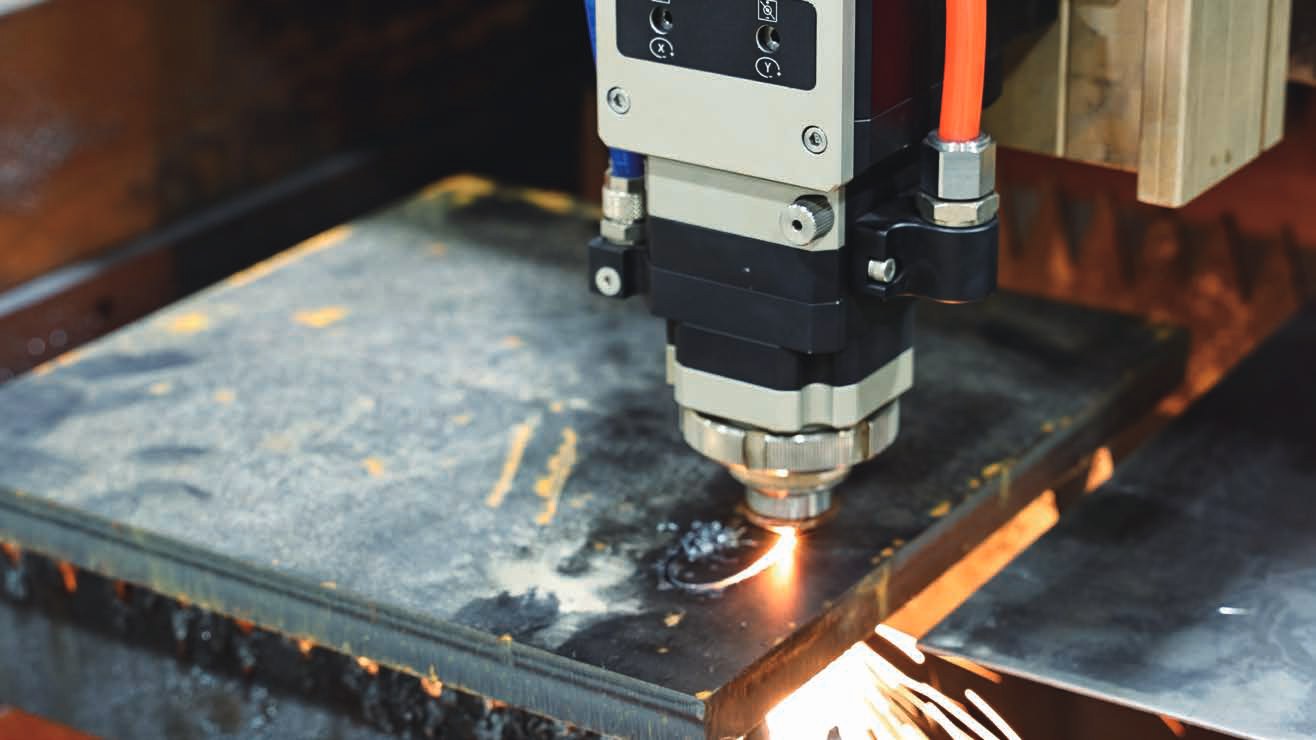
Collision Protection
A break-away mechanical mount absorbs impact when the head collides with raised workpiece edges, remnant scrap, or clamps. Protective screws allow the head to deflect rather than transmit the impact force to the optical components. The head realigns to its zero position automatically — no depot repair, no realignment procedure, no downtime. The operator resets and continues cutting.
Smart Piercing
Traditional piercing uses fixed timed parameters — the laser pulses for a set duration regardless of whether the material has actually pierced. Smart Piercing monitors the piercing process in real time using backscatter detection and immediately advances to the cutting move the moment the pierce is confirmed. This reduces average pierce time, prevents over-piercing damage on thin material, and eliminates the most common source of part-start defects.
Auto Recut (Process Monitoring)
The head monitors the cutting kerf using a sensor. If a section of a part is detected as not fully cut through — due to a focus drift, gas interruption, or material inconsistency — the cutting head automatically returns to the failed section and re-cuts it. This prevents incomplete parts reaching the next production stage and eliminates the need for manual part inspection after every cut.
Smart Laser Off
Controls the exact moment the laser shuts off relative to head movement at the end of a contour. Imprecise laser-off timing leaves a characteristic groove or burn mark at the cut exit point — visible on the finished part's edge. Smart Laser Off calculates the optimal shutdown point based on material, power, and speed to produce a clean, slag-free edge at both contour entry and exit.
Co-Edge Piercing Monitoring
When nesting parts, contours that share an edge ("co-edge" or "common line cutting") present a decision point: does the head pierce again at the shared edge, or is a pierce unnecessary because the kerf from the adjacent cut already exists? Co-Edge Piercing Monitoring detects this situation and makes the correct decision automatically — eliminating unnecessary piercing delays and preventing double-piercing damage on thin material.
Cutting Path Monitoring
A sensor monitors the actual kerf width in real time during the cutting pass. If the kerf begins to narrow or widen — indicating a focus drift or process drift — the system intelligently adjusts the focus position to compensate and maintain consistent kerf geometry. This is what enables consistent cutting results across a full 3015 or 4020 sheet without manual re-zeroing during the job.
Bevel Cutting
Available on BLT-4P series with the AB swing axis. Supports V-bevel, Y-bevel, and X-bevel profiles up to ±45° in a single pass — no secondary beveling operation needed. Used for weld-prep on structural steel and pressure vessel components. The swing axis compensates for head tilt to maintain consistent nozzle standoff and gas assist angle during the bevel pass.
3D Sensing Head
Available on BLT-3T, BLT-4T, and BLT-5H tube cutting heads. The 3D sensing head adapts to the complex geometry of structural profiles — round tubes, square tubes, I-beams, C-channels, angle iron, and custom profiles. Its compact interference area fits into the tight spaces between tube flanges and web sections, enabling cuts that conventional heads cannot reach.
Which features come with which heads?
Not every feature is available on every BLT model. Higher series heads include more monitoring and intelligence. The table below maps key features to each series — use it alongside the selection guide to confirm your chosen head meets your production requirements.
| Feature | BLT-3 | BLT-4 | BLT-6H | BLT-6MA | BLT-8H | BLT-9MA |
|---|---|---|---|---|---|---|
| Closed-Loop Monitoring | ✓ | ✓ | ✓ | ✓ | ✓ | ✓ |
| Fast Focusing | ✓ | ✓ | ✓ | ✓ | ✓ | ✓ |
| Built-In Amplifier | ✓ | ✓ | ✓ | ✓ | ✓ | ✓ |
| Collision Protection | ✓ | ✓ | ✓ | ✓ | ✓ | ✓ |
| Protective Window Monitoring | ✓ | ✓ | ✓ | ✓ | ✓ | ✓ |
| Cutting Gas Pressure Monitoring | ✓ | ✓ | ✓ | ✓ | ✓ | ✓ |
| Full-Body Water Cooling | — | ✓ | ✓ | ✓ | ✓ | ✓ |
| Smart Piercing | — | — | ✓ | ✓ | — | — |
| Auto Recut | — | — | ✓ | ✓ | — | ✓ |
| Protective Window Anti-Explosion | — | — | ✓ | ✓ | ✓ | ✓ |
| Stray Light Monitoring | — | — | ✓ | ✓ | — | — |
| Co-Edge Piercing Monitoring | — | — | ✓ | ✓ | — | — |
| Real-Time Focus Centering | — | — | — | ✓ | — | ✓ |
| Cutting Path Monitoring | — | — | — | ✓ | — | ✓ |
| Variable Beam Shape | — | — | — | — | — | ✓ |
| Dual Energy Distribution | — | — | — | — | ✓ | — |
| Smart Laser Off | — | — | ✓ | — | ✓ | ✓ |
✓ = Included standard · — = Not available on this series · Some features marked optional (○) in BOCI's documentation may require a specific controller version.
Ready to choose the right head for your machine?
Use the selection guide to match your laser power, material type, and cutting thickness to the correct BLT model and focal length — or talk to our team if you need application advice.