Fiber Laser
Tube Cutting Machines
Cut round, square, rectangular, and custom profiles with complex cope, saddle, and end-face geometry — all in a single automated operation.
Tube Cutting Machine Lineup
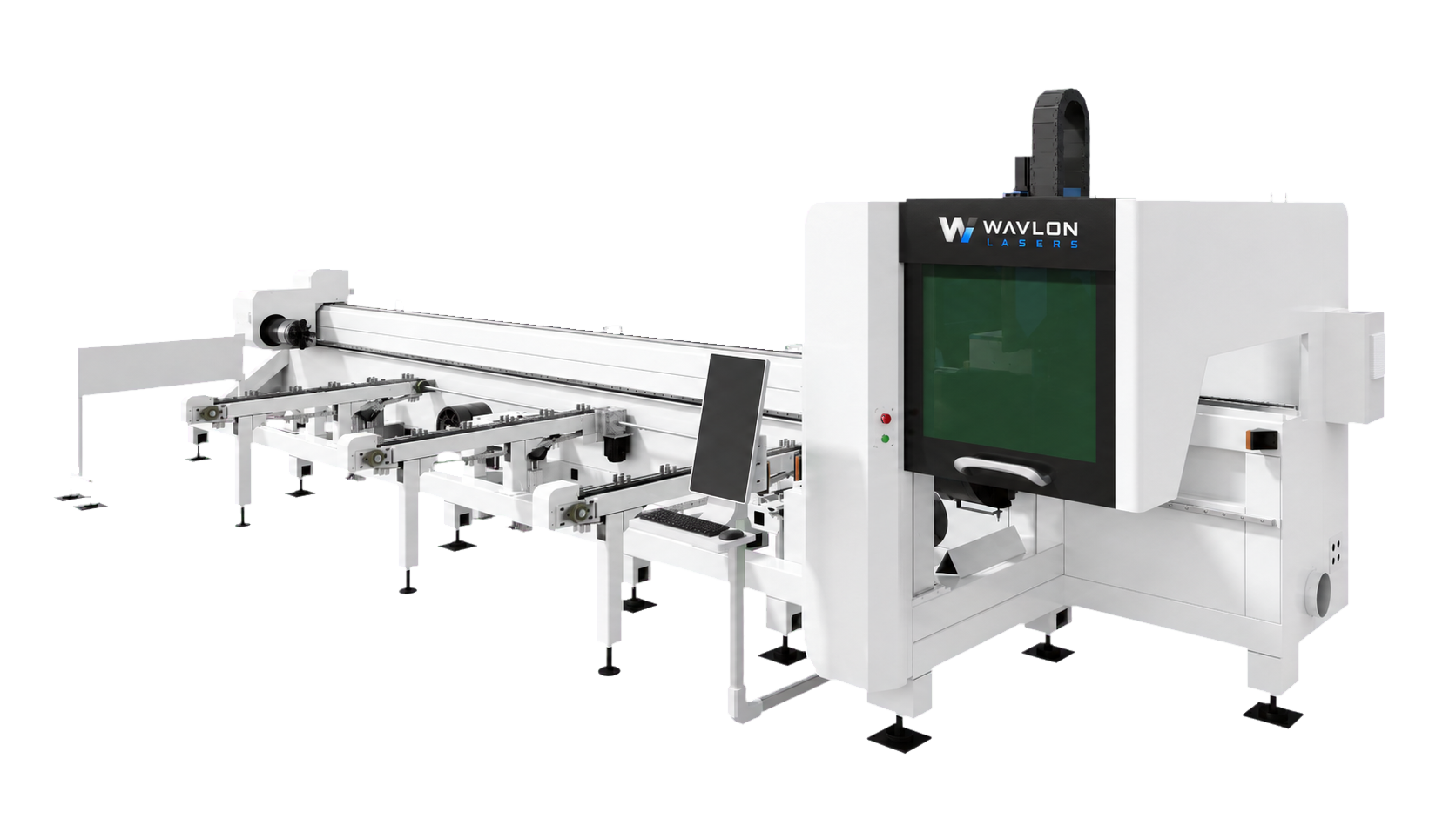
TubeCut Double Chuck 1.5–12kW
The entry and mid-range tube laser platform. Two synchronized chucks handle round and square sections from 120mm up to 360mm on a 6,000mm bed. Four models — TDC-120, TDC-160, TDC-240, and TDC-360 — let you match power and capacity to the profiles you actually run.
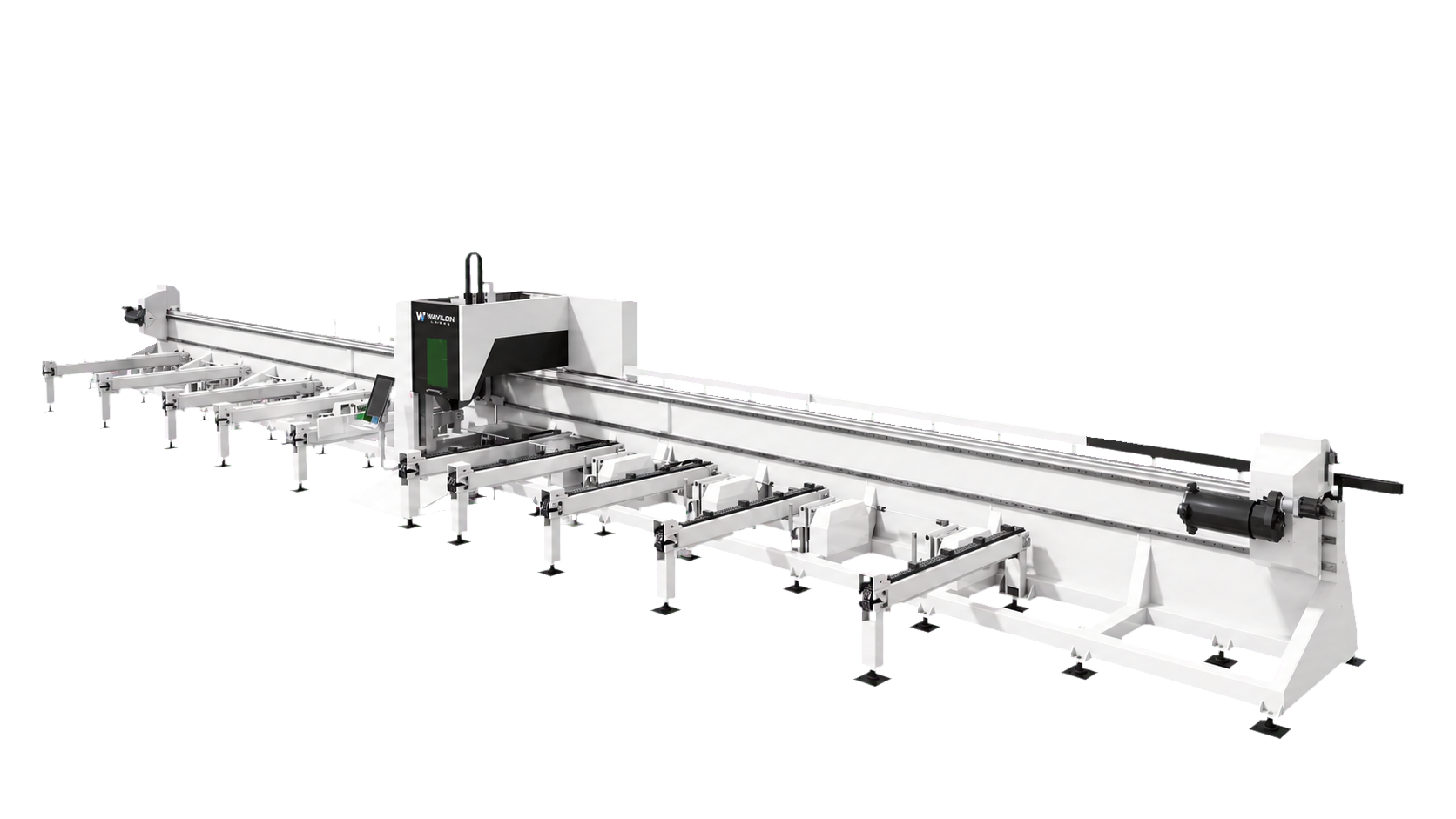
TubeCut Triple Chuck 6–30kW
Built for structural steel and heavy-wall profiles. A third synchronized chuck supports the workpiece through the cut, holding accuracy on sections up to 680mm round and 570mm square across a 12,000mm bed at loads to 1,500kg. Three models: TTC-360, TTC-520, and TTC-680/570.
Need both sheet and tube cutting? Either TubeCut platform can be paired with a ProCut, PowerCut, or UltraCut sheet machine on the same floor. Contact us to discuss a combined quote.
Get a Bundle Quote →How fiber laser tube cutting works
A fiber laser tube cutting machine holds the workpiece in rotating chucks and cuts as the section turns beneath a fixed cutting head. Because the machine controls rotation and length together, it can produce cope cuts, saddle joints, holes, slots, and angled end profiles in a single automated pass — geometry that would otherwise take a bandsaw, a drill, and hand grinding to fit up.
For a fabrication shop the saving is mostly in what comes after the cut. Sections come off the machine with weld-ready end profiles and pre-cut holes, so assembly is faster and fit-up is consistent from part to part. If you are currently sawing tube and grinding joints by hand, a tube laser usually removes more labour than adding a second sheet cutter would.
Tube laser vs. saw and drill
| Fiber laser tube cutter | Bandsaw + drill + manual fit-up | |
|---|---|---|
| End profiles | Cope, saddle, miter, angled — cut automatically | Hand-ground to fit |
| Holes & slots | Cut in the same operation | Separate drilling / punching step |
| Fit-up consistency | Repeatable to ±0.05mm | Varies with the operator |
| Handling | One setup, one machine | Multiple stations and handoffs |
| Weld prep | Comes off the machine ready to assemble | Manual grinding before welding |
What profiles can it cut?
Both Wavlon TubeCut platforms handle round tube and square and rectangular HSS. The Double Chuck also cuts custom profiles; the Triple Chuck is built for large round and square structural sections. Common work includes:
- Round tube — handrail, mechanical tube, hydraulic line, and pipe
- Square and rectangular HSS — structural framing, trailers, and equipment frames
- Channel and angle — supports, brackets, and cross-members
- Large structural sections — heavy round and square profiles on the Triple Chuck
Sizing the machine: diameter, length, and power
Three numbers decide which platform fits, and they usually matter in this order:
- Section size. The Double Chuck covers round and square profiles up to 360mm; the Triple Chuck reaches 680mm round and 570mm square. If your largest section fits inside 360mm, the Double Chuck is the natural home.
- Bed length. The Double Chuck runs a 6,000mm bed; the Triple Chuck a 12,000mm bed. If you cut 12-metre structural steel, bed length settles the choice before anything else does.
- Laser power. Within a platform, power sets how thick a wall you cut and how fast. The Double Chuck spans 1.5–12kW across four models; the Triple Chuck 6–30kW across three. As with sheet cutting, size to the wall thickness you run regularly rather than the heaviest section you have ever handled.
Load weight is the number that gets forgotten. The Double Chuck is rated to 250kg per load; the Triple Chuck to 1,500kg. Long, heavy structural sections can exceed the Double Chuck's limit well before they exceed its diameter capacity — check the weight of your typical stick, not just its size.
Why the third chuck matters
A double-chuck machine grips the workpiece at two points. A triple-chuck machine adds a middle chuck that supports the section through the cut, which keeps long, heavy profiles from deflecting and holds accuracy where a two-chuck setup would start to sag. That is why the Triple Chuck is the platform for 12-metre beds and 1,500kg loads — the extra support, not just the extra power, is what makes heavy structural work repeatable.
Choosing between the two platforms
| TubeCut Double Chuck | TubeCut Triple Chuck | |
|---|---|---|
| Power | 1.5–12kW | 6–30kW |
| Max round | 360mm | 680mm |
| Max square | 360mm | 570mm |
| Bed length | 6,000mm | 12,000mm |
| Max load | 250 kg | 1,500 kg |
| Chucks | 2 (double) | 3 (triple) |
| Models | TDC-120 / 160 / 240 / 360 | TTC-360 / 520 / 680-570 |
| Best for | Entry to mid-range tube and profile | Heavy structural and large sections |
Both hold repeat positioning accuracy of ±0.05mm and rotate their chucks 360° continuously. The decision is almost always about the size, length, and weight of what you cut — power follows from there.
Buying a tube laser in Canada
Every Wavlon machine is pre-configured for Canadian electrical and safety standards before it ships, installed on-site by our own technicians, and backed by a standard 2-year warranty on parts and labour, with extended plans available. Operator training at your facility is included with the purchase, and equipment financing is arranged in Canadian dollars so there is no exchange-rate exposure between approval and delivery.
Explore the Double Chuck → · Explore the Triple Chuck → · Read the Canadian buyer's guide →